
Index
- What Is Conversion Rate Optimization?
- How Do You Calculate Conversion Rate?
- What Is a Good Conversion Rate for a Website?
- Why Is My Website Not Converting?
- What's the Difference Between CRO and SEO?
- How to Improve Website Conversion Rate: A Practical Checklist
- Landing Page Conversion Optimization: Where Most Businesses Win Fastest
- A/B Testing for Websites: How It Works
- CRO Tools for Small Business
- How Can I Improve Landing Page Conversion Rate Using Google Analytics?
- How Can I Improve Landing Page Conversion Rate Using a Popular Analytics Platform?
- How to Increase Website Conversions Without More Traffic
- How Long Does CRO Take to Show Results?
- Conversion Rate Optimization Marketing: A Core Part of Sustainable Growth
- How a Conversion Rate Optimization Agency in UAE Can Help
Your website is attracting visitors, but are those visitors turning into customers? If your website receives traffic but generates very few enquiries, bookings, or sales, the problem may not be your traffic. It could be your conversion experience.
This is where conversion rate optimization (CRO) comes in. Instead of spending more money to attract additional visitors, CRO focuses on helping more of your existing visitors take meaningful action.
For businesses in the UAE, where customers often compare multiple brands before making a decision, a website that communicates value clearly and makes it easy to take the next step can make a significant difference.
Whether you run an eCommerce store, a service-based business, or a growing startup, this guide explains what conversion rate optimization is, how to build a CRO strategy, and how a conversion rate optimization agency can help turn website traffic into measurable business growth.
What Is Conversion Rate Optimization?
Conversion rate optimization is the systematic process of increasing the percentage of website visitors who take a desired action whether that’s making a purchase, filling out a form, booking a call, or signing up for a newsletter. A CRO strategy typically involves analyzing user behavior, identifying friction points, testing changes, and measuring results.
CRO isn’t guesswork. It’s a data-driven discipline that combines analytics, user psychology, design, and copywriting to remove obstacles between a visitor and the action you want them to take.
How Do You Calculate Conversion Rate?
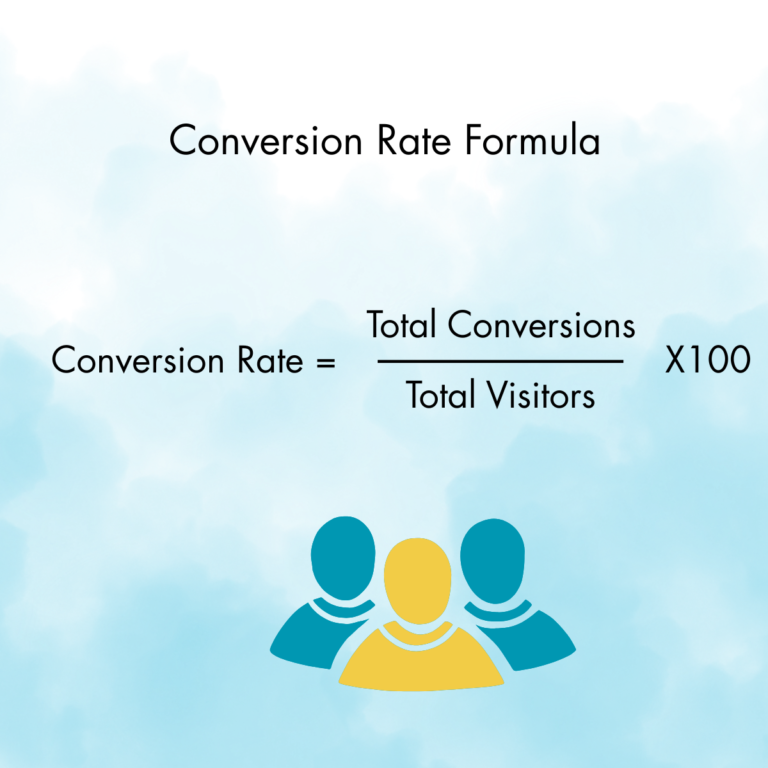
For example:
Metric | Value |
Website visitors | 5,000 |
Enquiries received | 150 |
Conversion rate | 3% |
A 3% conversion rate means that 3 out of every 100 visitors completed the desired action.
When measuring performance, make sure you distinguish between users, sessions, and visitors. Your conversion rate may differ depending on which measurement you use. For meaningful comparisons, use the same calculation method consistently.
What Is a Good Conversion Rate for a Website?
This is one of the most common questions we get, and the honest answer is: it depends on your industry. That said, general benchmarks include:
- E-commerce: 2–3% is average, 5%+ is strong
- B2B lead generation: 2–5% is typical
- SaaS free trial signups: 3–7%
- Landing pages (targeted campaigns): 10%+ for high-converting pages
Rather than chasing an industry average, the smarter goal is beating your own historical performance consistently. A 20% relative improvement in conversion rate can mean thousands of dirhams in additional revenue without spending a single extra dirham on traffic.
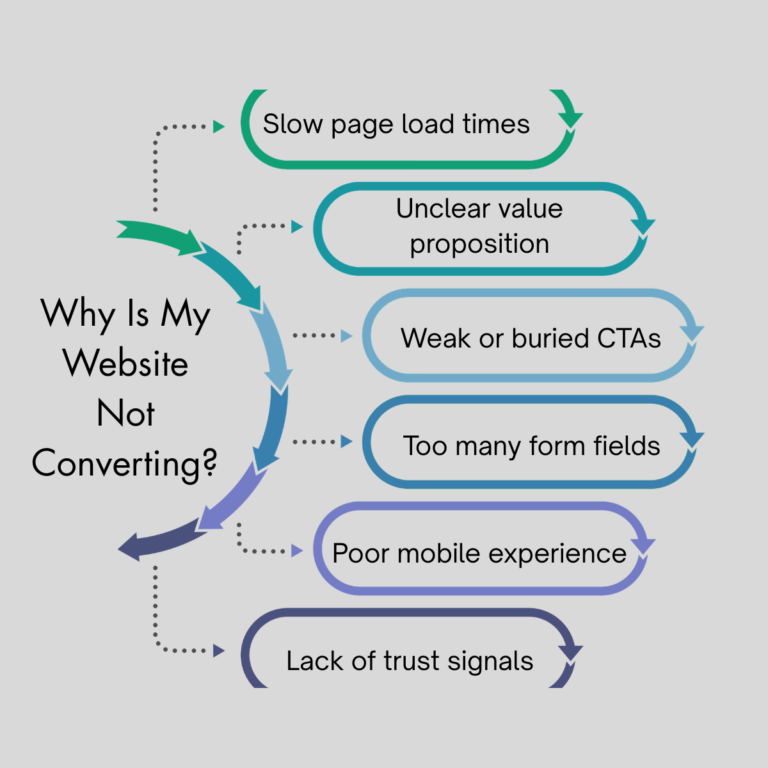
Why Is My Website Not Converting?
Before optimizing anything, you need to diagnose the problem. Common culprits include:
- Slow page load times, every extra second of load time can significantly hurt conversions
- Unclear value proposition, visitors don’t understand what you offer within the first few seconds
- Weak or buried calls-to-action (CTAs)
- Too many form fields creating unnecessary friction
- Poor mobile experience on a site that isn’t truly optimized for smaller screens
- Lack of trust signals no reviews, testimonials, security badges, or clear contact information
If any of these sound familiar, you’ve already identified your starting point.
What's the Difference Between CRO and SEO?
SEO and CRO work hand in hand, but they solve different problems. SEO brings visitors to your website; CRO turns those visitors into customers. You can rank #1 on Google and still lose money if your landing page doesn’t convert. Conversely, a beautifully optimized page is wasted if no one ever finds it.
The businesses that grow fastest treat SEO and CRO as two halves of the same engine one drives volume, the other drives value.
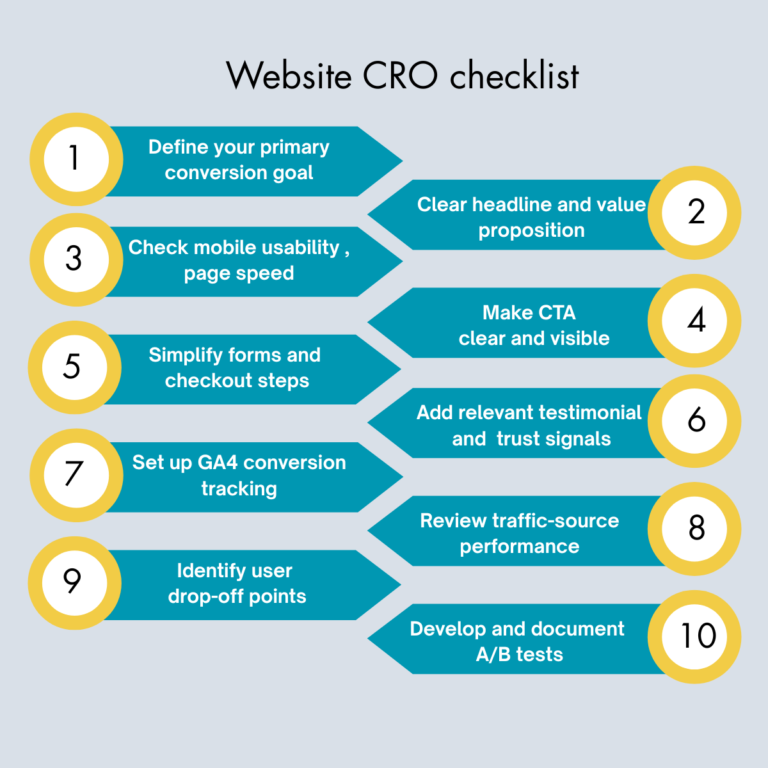
How to Improve Website Conversion Rate: A Practical Checklist
Here’s a conversion rate optimization checklist you can start applying today:
- Audit your analytics. Use Google Analytics and heatmap tools (like Hotjar or Microsoft Clarity) to see where visitors drop off.
- Clarify your headline and value proposition. Visitors should understand what you do and why it matters within 5 seconds.
- Simplify your CTAs. One primary action per page, worded clearly (“Get a Free Quote” beats “Submit”).
- Reduce form friction. Only ask for information you truly need at that stage.
- Add social proof. Testimonials, case studies, client logos, and reviews build immediate trust.
- Optimize page speed. Compress images, minimize scripts, and leverage caching.
- Improve mobile UX. Test every conversion path on an actual phone, not just a resized browser window.
- Run A/B tests. Never assume test button colors, headlines, layouts, and offers against each other with real data.
Landing Page Conversion Optimization: Where Most Businesses Win Fastest
Landing pages tied to specific campaigns are the highest-leverage place to start CRO work because their scope is narrow and measurable. Focus on:
- A single, focused offer (avoid multiple competing CTAs)
- Benefit-driven copy over feature-driven copy
- Visual hierarchy that guides the eye toward the CTA
- Trust elements placed near the conversion point, not buried at the bottom
Small, focused improvements to a landing page often produce faster wins than broader website changes.
A/B Testing for Websites: How It Works
A/B testing (or split testing) means showing two versions of a page Version A and Version B to different segments of your traffic, then measuring which one performs better. This is core to any real CRO strategy because it removes opinion from the equation and replaces it with evidence.
Start small: test one variable at a time (a headline, a CTA color, a form length) so you know exactly what caused the change in performance.
CRO Tools for Small Business
You don’t need an enterprise budget to start optimizing. Accessible tools include:
- Google Analytics 4 for traffic and behavior data
- Microsoft Clarity free heatmaps and session recordings
- Google Optimize alternatives / VWO / Convert for A/B testing
- Hotjar for visitor feedback and behavior insights
- PageSpeed Insights to diagnose site speed issues
How Can I Improve Landing Page Conversion Rate Using Google Analytics?
Google Analytics 4 (GA4) can help you understand how visitors interact with your website and identify opportunities for improvement.
Here is how to use it as part of your CRO process:
- Track key events: Configure events for form submissions, purchases, phone clicks, and other meaningful actions.
- Analyse landing pages: Use GA4 reports to understand which pages attract visitors and contribute to conversions.
- Review traffic sources: Compare organic search, paid ads, social media, and referral traffic to identify differences in user behaviour.
- Identify drop-offs: Examine the steps visitors take before converting and investigate where they abandon the journey.
- Test improvements: Use your findings to develop hypotheses and evaluate page changes through controlled experiments.
GA4 can show you where users may be experiencing friction, but it does not automatically explain why. Combine analytics with user feedback, session recordings, and usability testing to develop a more complete understanding.
How Can I Improve Landing Page Conversion Rate Using a Popular Analytics Platform?
Using Google Analytics 4, start by setting up conversion events for every meaningful action (form submissions, purchases, call clicks). Then explore the Path Exploration report to see where users drop off before converting, and segment traffic by source to identify which channels bring the highest-converting visitors. This tells you exactly where to focus your optimization efforts instead of guessing.
How to Increase Website Conversions Without More Traffic
This is the real magic of CRO: you don’t need to spend more on ads to make more money. By improving your existing traffic’s conversion rate through better UX, clearer messaging, and continuous testing, you extract more value from every visitor you’re already paying to attract.
How Long Does CRO Take to Show Results?
CRO is not an overnight fix. Most businesses start seeing measurable movement within 4–8 weeks, with more substantial, compounding gains over 3–6 months as testing cycles accumulate data and insights. CRO is an ongoing process, not a one-time project; the businesses that treat it as a continuous discipline see the biggest long-term returns.
Conversion Rate Optimization Marketing: A Core Part of Sustainable Growth
CRO isn’t a “nice to have” it’s one of the highest-ROI marketing activities available to businesses today. Combined with SEO, paid media, and strong branding, website conversion rate optimization ensures every dirham spent on traffic works harder for your bottom line.
How a Conversion Rate Optimization Agency in UAE Can Help
As a conversion rate optimization agency based in the UAE, Go Creative Circle helps businesses of every size from local startups to international brands turn website traffic into real, measurable revenue. If you’re asking “why is my website not converting?” or you’re ready to build a structured CRO strategy, our team combines data analysis, UX design, and continuous testing to get you there.
For businesses seeking CRO services in Dubai or across the UAE, the process typically involves:
- Conversion audit: Identify usability issues, friction points, and missed opportunities.
- Data analysis: Review traffic sources, user behaviour, and conversion tracking.
- CRO strategy: Prioritise improvements based on business objectives and available evidence.
- Landing page optimization: Improve messaging, layout, CTAs, and conversion journeys.
- Testing and reporting: Measure results, document findings, and refine the strategy.
Ready to stop losing potential customers to a leaky website? Let’s talk about your CRO strategy.
Explore Go Creative Circle’s digital marketing services.