
Index
- Is short-form video worth it for businesses?
- How Do You Create a Short-Form Video Strategy?
- Reels vs TikTok for brands: which is better in the UAE?
- How Long Should a Reel Be in 2026?
- How Often Should Brands Post Reels?
- How to Make Reels Without a Big Budget
- Short-form video for B2B brands
- Does Short-Form Video Generate Leads?
- Ready to win on Reels and TikTok?
Your brand is more than your logo, colour palette, or website. It is how customers recognise your business, what they associate with your name, and why they choose you over competitors.
But businesses evolve. Markets change, customer expectations shift, and what worked five years ago may no longer represent your company today.
So, when to rebrand becomes an important question.
Rebranding isn’t always about creating something completely new. Sometimes, a strategic brand refresh is enough to strengthen your identity and reconnect with your audience.
In this blog, we explore seven signs you need a rebrand, the difference between a brand refresh and a complete rebrand, and how to approach the process without losing customers or search engine visibility.
What Does It Mean When You Rebrand?
Rebranding means changing how your business presents and positions itself in the market.
It may involve updating your logo, visual identity, brand messaging, business name, website, or overall positioning.
The objective is to ensure your brand reflects your company’s current values, services, audience, and future direction.
A successful rebranding strategy goes beyond aesthetics. It helps businesses communicate their value more effectively and build stronger relationships with customers.
Brand Refresh vs Rebrand: What's the Difference?
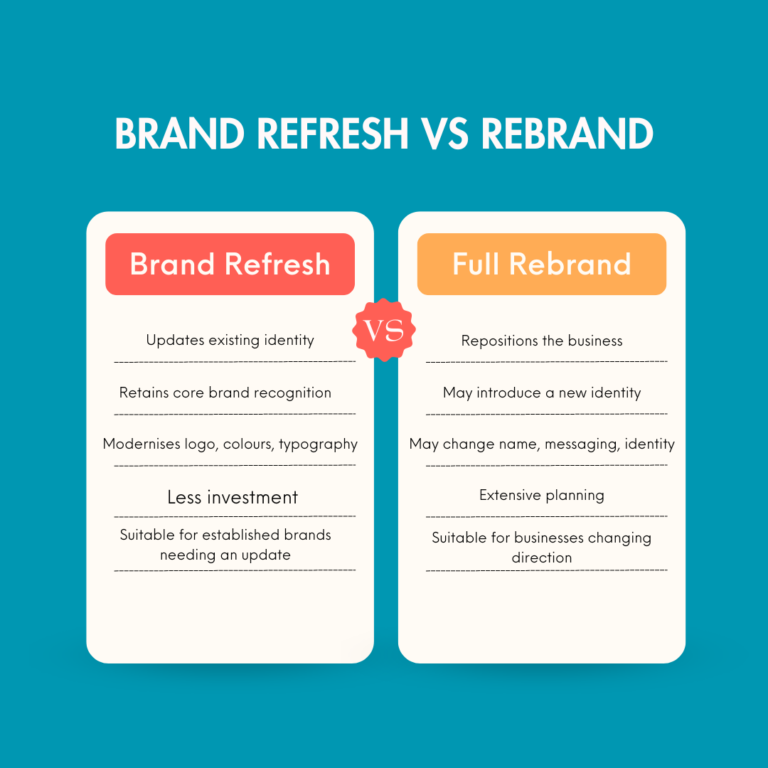
Before deciding to rebrand, understand whether your business needs a complete transformation or a smaller visual and messaging update.
Brand Refresh | Full Rebrand |
Updates existing identity | Repositions the business |
Retains core brand recognition | May introduce a new identity |
Modernises logo, colours, typography | May change name, messaging, identity |
Usually requires less investment | Requires more extensive planning |
Suitable for established brands needing an update | Suitable for businesses changing direction |
For example, a company with strong customer recognition but outdated visuals may only need a logo redesign vs full rebrand.
However, if the company is entering a completely different market, a comprehensive rebrand may be necessary.
7 signs it's time for a rebrand
How do you know if your business needs a rebrand? Look for these signals. One alone may call for a refresh; three or more usually point to a full rebrand.
1. Your brand looks outdated
How do you know if your brand is outdated? Hand your website to someone who’s never seen it. If their first reaction is “this looks old,” buyers are thinking it too. Dated visuals quietly signal a dated business.
What to do: Evaluate your visual identity, website experience, and marketing materials. A brand refresh may be enough to modernise your appearance without changing your core identity.
2. Your Business Has Outgrown Its Original Identity
Businesses rarely remain the same forever.
You may have started with one product or service and expanded into multiple industries, locations, or customer segments.
However, your original branding might still communicate your old business model.
For example, a company that began as a small retail supplier but now serves enterprise clients may need a more professional, B2B-focused identity.
What to do: Revisit your brand positioning, messaging, and identity to reflect your current capabilities and future ambitions.
3. You're Targeting a Different Audience
Your ideal customer today may not be the same customer you targeted when you launched.
Perhaps you’re moving from budget-conscious consumers to premium customers or expanding from local customers to international markets.
If your brand doesn’t connect with your new audience, your marketing efforts may struggle to deliver results.
What to do: Conduct audience research and align your brand’s messaging, visuals, and communication style with your target market.
4. Your Brand Messaging Is Unclear
Can customers understand what your business does within a few seconds of visiting your website?
If your messaging is confusing, generic, or inconsistent, your brand may be losing opportunities.
Statements such as “We deliver quality solutions” do little to explain what makes a business different.
What to do: Define your unique value proposition, brand personality, and key messaging pillars. Clear communication is often more valuable than a new logo.
5. You're Losing Relevance in Your Market
Declining engagement, fewer enquiries, or reduced customer interest may indicate that your brand is no longer connecting with its audience.
However, these challenges can also result from pricing, competition, product quality, or marketing performance.
What to do: Review customer feedback, competitors, and market positioning before deciding whether rebranding is the right solution.
6. Your Business Has Merged, Expanded, or Changed Direction
Mergers, acquisitions, new partnerships, and major business expansions often create a need for a unified identity.
Multiple brands operating under one organisation can confuse customers if their positioning and communication aren’t aligned.
What to do: Develop a rebranding strategy that clearly communicates the new business structure while preserving valuable brand recognition.
7. Your Competitors Have Stronger Brand Positioning
Your competitors may offer similar services but communicate their value more effectively.
If their websites, messaging, and visual identities appear more professional and consistent, customers may naturally gravitate towards them.
This doesn’t mean you should copy competitors.
What to do: Identify your competitive advantage and build a distinctive identity around what makes your business valuable.
Why Should You Rebrand? Key Benefits
Rebranding a business can create opportunities for growth when supported by clear business objectives.
The benefits of rebranding include stronger brand recognition, improved customer trust, clearer market positioning, greater relevance to new audiences, and more consistent marketing communication.
A well-executed rebrand can also improve employee alignment and support expansion into new markets.
However, rebranding should solve a genuine business challenge rather than simply follow design trends.
Is rebranding risky?
Yes, when it’s driven by taste instead of strategy. The most common rebranding mistakes to avoid:
- Changing everything at once without research
- Ignoring what loyal customers already love about you
- Launching quietly, so people think you’ve been replaced
- Forgetting the technical side, like redirects and listings
- Treating it as a logo job rather than a business decision
Rebranding Checklist for Small Businesses
Before beginning your rebranding journey, follow these essential steps:
- Define why your business needs a change.
- Research your customers and competitors.
- Audit your existing brand identity.
- Clarify your positioning and messaging.
- Develop your new visual identity.
- Update your website and marketing materials.
- Create a communication and launch plan.
- Monitor customer feedback and performance.
For businesses in the UAE, working with an experienced branding agency UAE can help align creative decisions with commercial objectives.
Frequently Asked Questions About Rebranding
When is it time to rebrand?
It’s time to consider rebranding when your current identity no longer represents your business, connects with your target audience, or communicates your value effectively.
How do you know if your brand is outdated?
Review your visual identity, website, messaging, and customer feedback. Inconsistent design, unclear positioning, and outdated digital experiences are common warning signs.
Does rebranding hurt SEO?
Rebranding can affect SEO if website URLs, domains, content, or internal links change without proper planning. Preserve valuable content, implement 301 redirects where needed, and monitor rankings through Google Search Console.
How do you rebrand without losing customers?
Communicate why you’re changing, maintain familiar brand elements where appropriate, and reassure customers that the quality and service they value will continue.
How often should you rebrand?
There is no fixed timeline. Review your brand periodically, but undertake a major rebrand only when there is a clear strategic reason.
How much does rebranding cost in the UAE?
Costs vary significantly depending on whether you need a logo refresh, complete brand identity, strategy development, website redesign, or a full launch campaign. Request a scope-based quotation rather than relying on a standard package price.
How long does a rebrand take?
A simple brand refresh may take a few weeks, while a comprehensive rebrand involving research, strategy, design, website development, and implementation may take several months.
Is Your Brand Ready for Its Next Chapter?
Knowing when to rebrand is about recognising when your business identity no longer supports your growth.
Whether you need a modern logo, refreshed messaging, or a complete brand transformation, the right approach begins with understanding your business objectives and customers.
At Go Creative Circle, we help businesses build stronger identities through brand strategy, visual design, website development, and digital marketing.
Looking for a rebranding agency in Dubai to help reposition your business?
Contact Go Creative Circle to discuss your brand refresh or rebranding strategy.